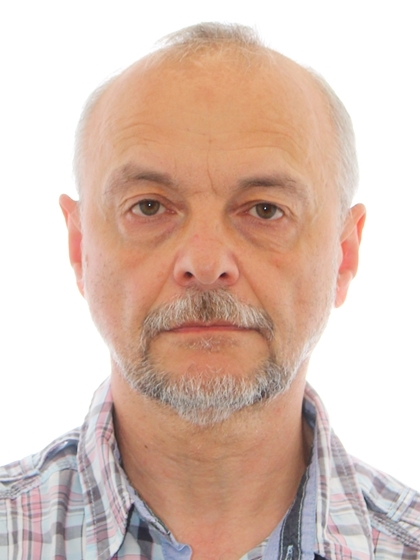
包甫博(Huba Bartos)
匈牙利罗兰大学语言学研究中心
重新审视普通话动词复制结构的句法
包甫博是布达佩斯罗兰大学(ELTE)语言学研究中心的高级研究员兼学术事务副主任,并在该校东亚研究所兼任教职,讲授汉语语言学和汉语语法。他于1992年获得汉学与英语语言文学硕士学位,1995年获得理论语言学硕士学位,并于2000年获得语言学博士学位,均就读于罗兰大学。其主要研究领域是句法学,尤其关注句法与形态学及语义学的界面;近年来研究兴趣亦延伸至音系学(音节结构)和语音学(声调与语调的相互作用)等领域。他曾两度担任欧洲汉语语言学学会(EACL)理事会成员,以及国际中国语言学学会(IACL)执行委员会成员,现任IACL会长。
The so-called "verb-doubling" (or "verb-copying") construction (VDC) has recurrently come into focus in studies on the syntax and semantics of Mandarin Chinese, ever since it was brought to the fore by Huang (1982). Its basic schema involves two identical spellouts of a verb V, the first followed by its internal argument (object), and the second by some complementative element. Two major lines of analysis can be distinguished: one assuming the two occurrences of V are movement-related, and another holding they are base-generated independently. The talk reassesses earlier analyses in light of recent contributions, exploring whether "VDC" is in fact a cover term for at least two different constructions, where one type is characterized by strict form-identity of V1 and V2 (potentially subject to movement analysis), while in the other, perfect form-identity is not strictly required (requiring a base-generation account).
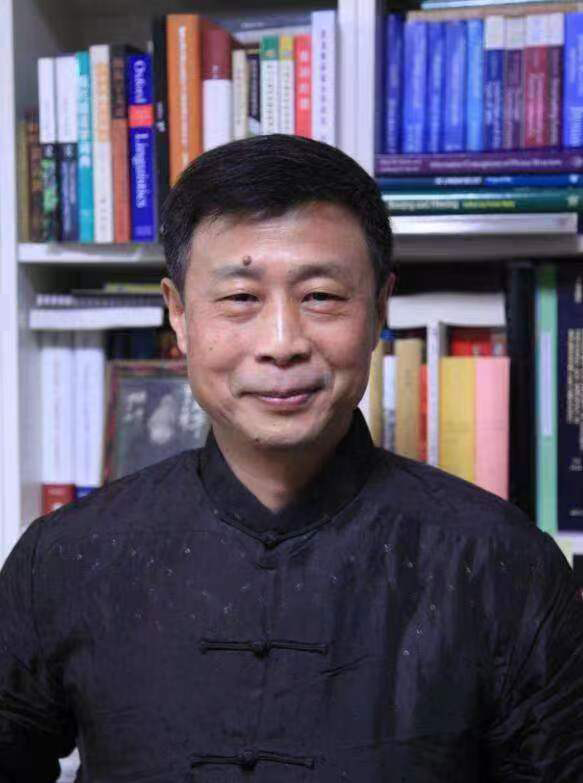
胡建华(Hu Jianhua)
广东外语外贸大学 / 中国社会科学院语言研究所
把动词作为方法
胡建华,语言学博士,广东外语外贸大学外国语言文学学科建设云山工作室首席专家,中国社会科学院语言研究所二级教授,国务院政府特殊津贴专家,国家社会科学基金重大项目首席专家;曾任《当代语言学》主编。研究领域涉及理论语言学、句法学、语义学、儿童语言获得与认知发展、心理语言学、语用学、跨语言比较句法、上古汉语句法等。近年出版著作有《形式句法研究——走向新描写主义》(商务印书馆,2024)等。
在上古汉语中,动词的地位十分凸显。上古汉语中的动词不仅包含动词性信息,还往往包含名词性信息。把动词作为方法,用动词的视角重新审视上古汉语,就会发现上古汉语句法至少有以下三个特点:(1)一些按现代汉语语感理解为名词的词,在上古汉语中其实是动词;(2)一些按照现代汉语语感会理解为介词或连词或副词的词,在上古汉语其实是动词;(3)一些所谓的连动或动宾结构,在上古汉语中很可能是动词并联结构。从动词出发来把握名词,最早是Yaska在Nirukta中提出来的研究方法。本文认为Nirukta的这一观点对今天的语言学分析仍然具有很大的启发意义。

李亚非(Li Yafei)
美国威斯康星大学麦迪逊校区
偏正与并列:普遍语法和象似性合作的证据
李亚非,美国威斯康星大学麦迪逊校区语言科学系教授,研究方向为句法、词法-句法界面以及科学哲学。多篇文章发表于《当代语言学》《中国语文》等国内刊物以及Journal of Chinese Linguistics、Linguistic Inquiry、Language、Natural Language and Linguistic Theory、Syntax等国际期刊。专著有X⁰: A theory of morphology-syntax interface(2005,MIT出版社)、The syntax of Chinese(2009,剑桥大学出版社,合著)、Universal Grammar and iconicity(2022,剑桥大学出版社)等。
自结构主义语言学开始,对于并列结构的句法分析一直是句法界的难题。原因之一是有一类语料长期被主流所忽视:基于绑定条件A、C的测试,并列项之间不存在成分统御关系(c-command),跟偏正结构中的修饰与被修饰成分形成鲜明对照。设语义关系向结构关系的投射必须同构(isomorphic),即两者之间存在象似性,则可以通过最简方案中的省力原则和标签机制确保在并列项之间不存在成分统御。本文涉及普遍语法和功能语法是否需要合作、怎样实现合作的问题,而合作的关键在于理论互补:普遍语法长于精确表述种种非对称语法关系,而象似性则作为功能语法中的核心元素,二者合作可以完整解释偏正结构和并列结构的句法差异。
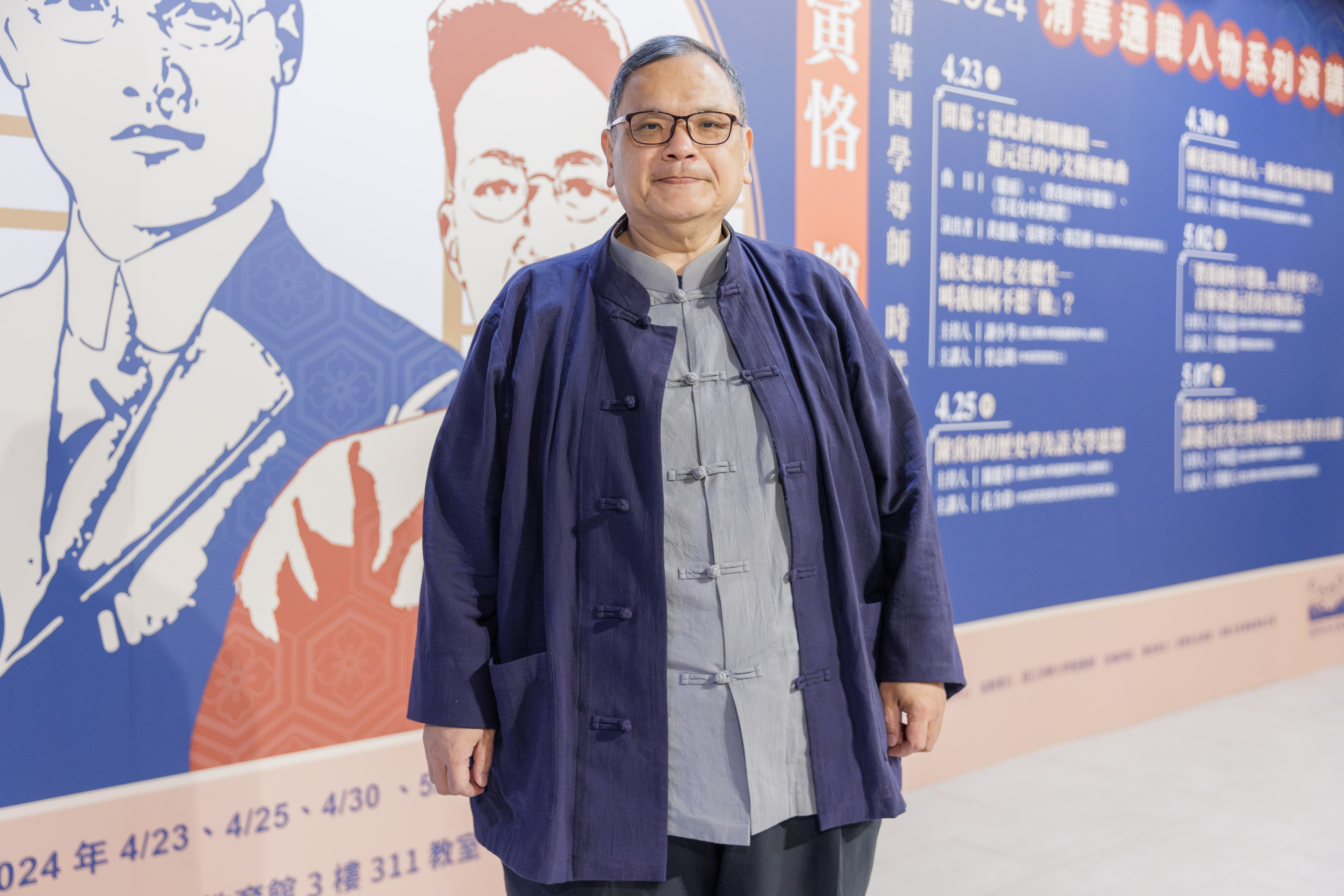
蔡维天(Wei-Tien Dylan Tsai)
台湾清华大学
内外二分与汉语的第二阶段句法
蔡维天,1994年于美国麻省理工学院获语言学博士学位,现为台湾新竹清华大学语言学研究所讲座教授。兼任International Journal of Chinese Linguistics编辑之一,现任GLOW in Asia主席。研究方向为汉语、南岛语族及越南语的句法-语用界面(制图学路径),涉及比较句法学与韵律语法学。
One defining characteristic of the Chinese language is its lack of inflectional morphology (tense, number, case, etc.), which sets it free to build a variety of quantificational and predicational dependencies through Merge instead of Move. The talk examines eight types of structural inner-outer dichotomy in Mandarin Chinese — including wh-adverbials, reflexive adverbials, causative light verbs, foci, affectives, A-not-A questions, deontic modals, and bouletic modals — arguing that Chinese displays a most fully-developed spectrum of analyticity effects. This approach provides a straightforward way to link synchronic with diachronic syntax, as almost every outer expression can be shown to derive from grammaticalization of its inner counterpart, introducing new types of speaker-oriented adverbial expressions in the "treetops" of the clausal spine. It also provides a new way to map different parts of the clausal spine to their respective semantic/pragmatic functions in the history of the Chinese language.
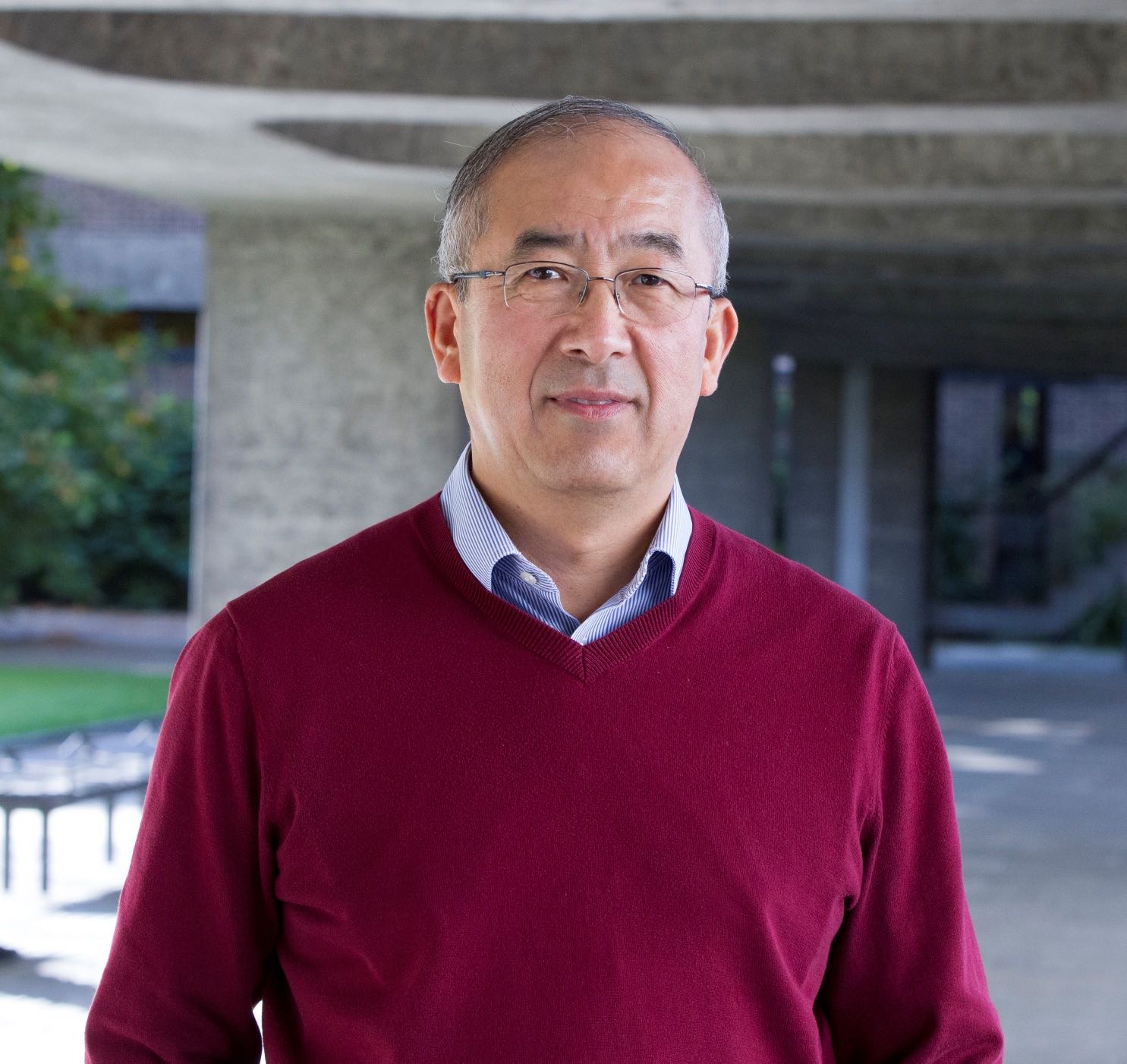
袁博平(Yuan Boping)
英国剑桥大学 / 上海交通大学
以语言学赋能第二语言汉语研究
袁博平教授于英国爱丁堡大学获得理论及应用语言学博士学位,此后在英国剑桥大学从事教学与研究逾二十年,现为剑桥大学汉语语言学荣休教授及邱吉尔学院院士。现同时担任上海交通大学语言学特聘教授。研究兴趣包括第二、第三语言习得,尤其是汉语和英语的非母语习得,近年亦关注语言学视角下的双语研究与失语症研究。现任Journal of Second Language Studies(John Benjamins)主编,已在国际权威期刊发表论文八十余篇。
This talk investigates English and Korean speakers' oral production of L2 Chinese elliptical sentences — sentences with Chinese verb-phrase ellipsis licensed by modal verbs, and sentences with ΣP-ellipsis licensed by the Chinese auxiliary shi 'BE'. An elicited imitation task was administered to learners at beginner, intermediate and advanced levels. Results show that instead of elliptical sentences, learners at early stages produced significantly more complete sentences with no ellipsis, challenging syntactic complexity analyses based on sentence length and dependency distance. No L1 influence was observed at beginner levels, disconfirming an influential hypothesis by Schwartz & Sprouse (1994, 1996); however, L1 influence appeared at intermediate and advanced levels. The absence of L1 influence at beginner levels is attributed to a breakdown at the syntax-stylistics interface and to beginners' difficulty in implementing checking and deletion operations in L2 oral production.
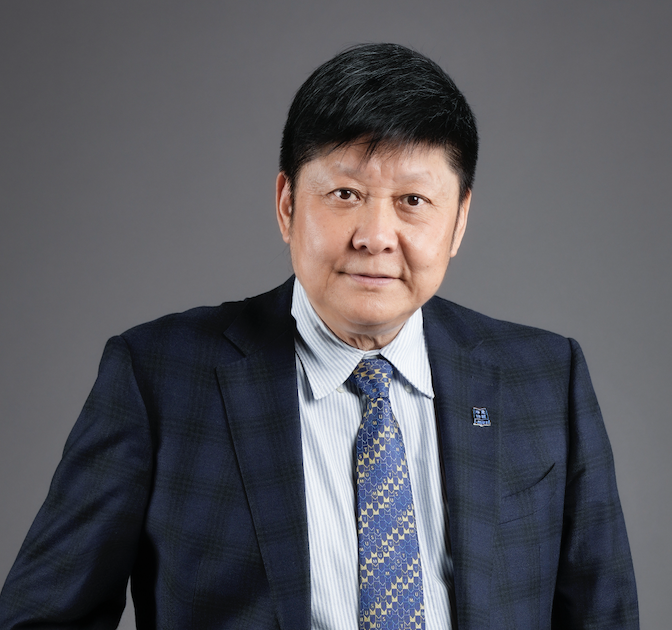
张洪明(Zhang Hongming)
澳门科技大学
大语言模型时代的语言学研究:挑战与机遇
张洪明,英国皇家学会工艺院终身院士,澳门科技大学讲座教授、国际学院院长、大学教育发展中心总监。曾执教于复旦大学、新加坡国立大学,1994年起执教于威斯康星大学麦迪逊分校,2022年为荣休终身教授。主要研究领域为韵律音系学、历史语言学、对比语言学、比较诗律学等。曾任国际中国语言学学会(IACL)会长、世界汉语教学学会副会长,及International Journal of Chinese Linguistics杂志主编。
Large language models (LLMs) are among the most consequential recent developments in natural language processing (NLP) and computational linguistics. This talk provides a technically grounded overview of major contemporary LLM architectures, their strengths and limitations, clarifying key distinctions: quantity vs. quality, creation vs. innovation, rule deduction vs. probabilistic imitation, NLP vs. AI, and AI vs. AGI. On empirical grounds, current LLMs are best viewed as advanced NLP systems rather than genuine artificial intelligence, predictably lacking robust causal reasoning. Explaining and improving "black-box" model behavior necessarily requires linguistic analysis, and core issues in AI explainability — such as "unintentional hallucinations" — demand linguistic theory for adequate diagnosis. LLMs track statistical co-occurrence patterns over symbols but do not genuinely encode rich semantic relations; addressing this semantic deficit lies at the heart of linguistic inquiry.