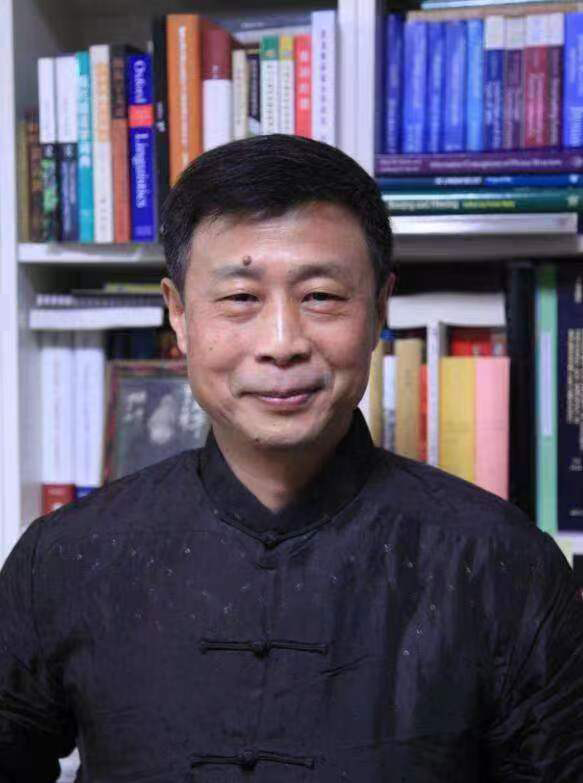
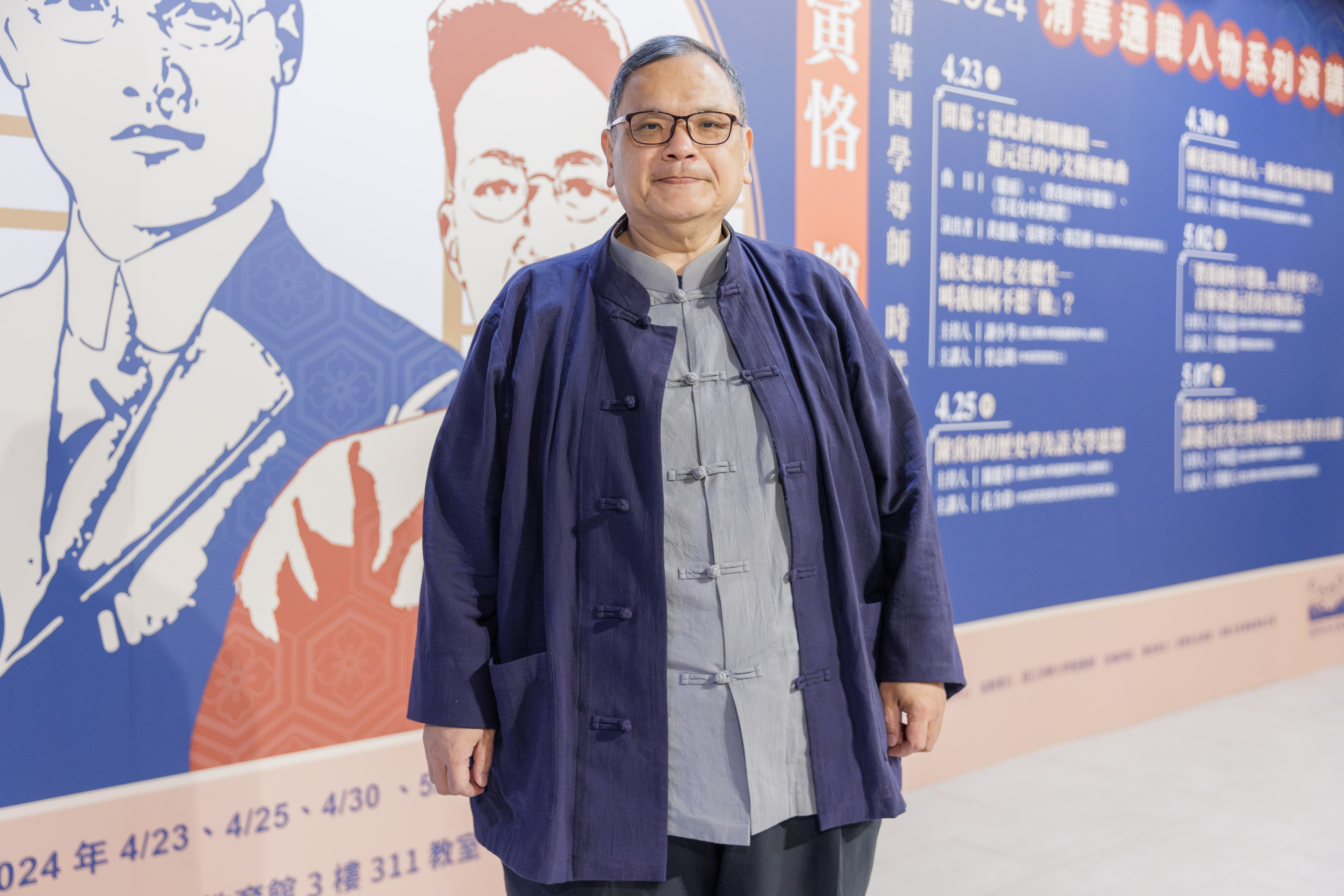
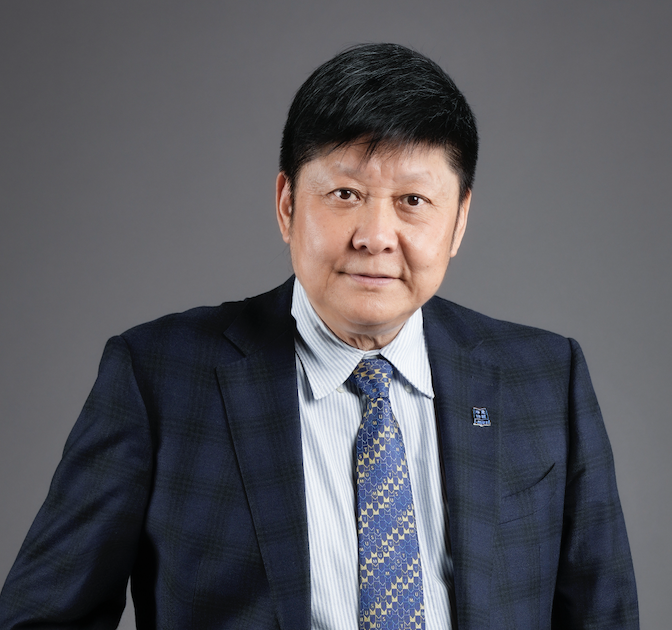
Distinguished keynote speakers at IACL-32 (in alphabetical order by surname)
Huba Bartos (包甫博)
ELTE Research Centre for Linguistics, Hungary
Revisiting the syntax of the Mandarin verb-doubling construction(s)
Huba Bartos is senior research fellow and deputy director-general for academic affairs at the ELTE Research Centre for Linguistics (formerly the Research Institute for Linguistics of the Hungarian Academy of Sciences). He also holds a part-time position at the Institute of East Asian Studies of Eötvös Loránd University (ELTE), Budapest, teaching Chinese linguistics. He received his PhD in linguistics (2000) from ELTE. His primary research field is syntax, with particular interest in its interface relations with morphology and semantics; recently, his attention has also turned to phonology (syllable structure) and phonetics (the interplay of tone and intonation). He has served twice on the board of EACL (2003–2009, 2018–present) and in the Executive Committee of IACL (2013–2015), and currently serves as President of the International Association of Chinese Linguistics.
The so-called "verb-doubling" (or "verb-copying") construction (VDC) has recurrently come into focus in studies on the syntax and semantics of Mandarin Chinese, ever since it was brought to the fore by Huang (1982). Its basic schema involves two identical spellouts of a verb V, the first followed by its internal argument (object), and the second by some complementative element. Two major lines of analysis can be distinguished: one assuming the two occurrences of V are movement-related, and another holding they are base-generated independently. The talk reassesses earlier analyses in light of recent contributions, exploring whether "VDC" is in fact a cover term for at least two different constructions, where one type is characterized by strict form-identity of V1 and V2 (potentially subject to movement analysis), while in the other, perfect form-identity is not strictly required (requiring a base-generation account).
Jianhua Hu (胡建华)
Guangdong University of Foreign Studies / Institute of Linguistics, CASS
Taking Verbs as a Method
Jianhua Hu is Chief Expert of the Yunshan Studio for foreign language and literature discipline development at Guangdong University of Foreign Studies, and a Level-2 Professor at the Institute of Linguistics, Chinese Academy of Social Sciences (CASS). He is a recipient of the State Council Special Government Allowance and served as editor-in-chief of Contemporary Linguistics. His research covers theoretical linguistics, syntax, semantics, child language acquisition, psycholinguistics, pragmatics, and the syntax of Classical Chinese.
In Classical Chinese, verbs occupy a highly prominent position, containing not only verbal but often nominal information. Taking verbs as a method and reexamining Classical Chinese from a verbal perspective reveals at least three features of Classical Chinese syntax: (1) words that feel nominal in Modern Chinese are actually verbs in Classical Chinese; (2) words that feel like prepositions, conjunctions, or adverbs are actually verbs; (3) some so-called serial verb or verb-object constructions are very likely parallel verb constructions. This approach echoes Yaska's method in the Nirukta, which proposed that nouns derive from verbs — a view that remains highly illuminating for linguistic analysis today.
Yafei Li (李亚非)
University of Wisconsin-Madison
Modification and Coordination: Evidence for the Collaboration of Universal Grammar and Iconicity
Yafei Li is Professor of Linguistics at the University of Wisconsin-Madison. His research areas include syntax, the morphology-syntax interface, and philosophy of science. He has published in leading international journals including Linguistic Inquiry, Language, Natural Language and Linguistic Theory, and Syntax, as well as in major Chinese journals. His books include X°: A theory of morphology-syntax interface (MIT Press, 2005), The syntax of Chinese (Cambridge University Press, 2009, co-authored), and Universal Grammar and iconicity (Cambridge University Press, 2022).
Since structural linguistics, syntactic analysis of coordinate structures has been a perennial challenge. One underappreciated observation is that binding condition A and C tests show coordinate members have no c-command relation between them, in sharp contrast to the modifier-modified relation in subordinate structures. Assuming that the projection of semantic relations onto structural relations must be isomorphic — i.e., there is iconicity between them — we can use the Principle of Economy and the labeling mechanism in Minimalism to ensure no c-command between coordinate members. This case addresses whether Universal Grammar and functional grammar need to collaborate and how, with iconicity serving as a core element of the interface: Universal Grammar excels at precisely representing asymmetric grammatical relations, while iconicity as a core element of functional grammar provides the bridge for a complete explanation of the syntactic contrast between subordinate and coordinate structures.
Wei-Tien Dylan Tsai (蔡维天)
Tsing Hua University, Hsinchu
Inner-outer Dichotomy and the Second Phase Syntax of Chinese
Wei-Tien Dylan Tsai received his Ph.D. degree in linguistics from the Massachusetts Institute of Technology in 1994, and is currently Distinguished Professor at the Linguistics Institute, National Tsing Hua University, Taiwan. He also serves as one of the editors of International Journal of Chinese Linguistics and is the current president of GLOW in Asia. His recent research explores the syntax-pragmatics interface under the cartographic approach, with emphasis on Chinese, Austronesian and Vietnamese languages from the perspective of comparative syntax and prosodic grammar.
One defining characteristic of the Chinese language is its lack of inflectional morphology (tense, number, case, etc.), which sets it free to build a variety of quantificational and predicational dependencies through Merge instead of Move. The talk examines eight types of structural inner-outer dichotomy in Mandarin Chinese — including wh-adverbials, reflexive adverbials, causative light verbs, foci, affectives, A-not-A questions, deontic modals, and bouletic modals — arguing that Chinese displays a most fully-developed spectrum of analyticity effects. This approach provides a straightforward way to link synchronic with diachronic syntax, as almost every outer expression can be shown to derive from grammaticalization of its inner counterpart, introducing new types of speaker-oriented adverbial expressions in the "treetops" of the clausal spine. It also provides a new way to map different parts of the clausal spine to their respective semantic/pragmatic functions in the history of the Chinese language.
Boping Yuan (袁博平)
University of Cambridge / Shanghai Jiao Tong University
Empowering L2 Chinese Research with Linguistics: A study of English and Korean speakers' L2 Chinese VP and ΣP ellipsis
Boping Yuan obtained his doctoral degree in theoretical and applied linguistics at the University of Edinburgh and subsequently taught and conducted research at the University of Cambridge for over twenty years. He is now Professor Emeritus in Chinese Language and Linguistics at the University of Cambridge and a Fellow of Churchill College, Cambridge, and is currently also a Distinguished Professor in Linguistics at Shanghai Jiao Tong University. His research interests include second and third language acquisition. He is editor-in-chief of Journal of Second Language Studies (John Benjamins) and has published over eighty articles in internationally prestigious journals including Language, Linguistics, Second Language Research, Studies in Second Language Acquisition, Bilingualism: Language and Cognition, and Journal of Chinese Linguistics.
This talk investigates English and Korean speakers' oral production of L2 Chinese elliptical sentences — sentences with Chinese verb-phrase ellipsis licensed by modal verbs, and sentences with ΣP-ellipsis licensed by the Chinese auxiliary shi 'BE'. An elicited imitation task was administered to learners at beginner, intermediate and advanced levels. Results show that instead of elliptical sentences, learners at early stages produced significantly more complete sentences with no ellipsis, challenging syntactic complexity analyses based on sentence length and dependency distance. No L1 influence was observed at beginner levels, disconfirming an influential hypothesis by Schwartz & Sprouse (1994, 1996); however, L1 influence appeared at intermediate and advanced levels. The absence of L1 influence at beginner levels is attributed to a breakdown at the syntax-stylistics interface and to beginners' difficulty in implementing checking and deletion operations in L2 oral production.
Hongming Zhang (张洪明)
Macau University of Science and Technology
Linguistic Research in the LLM Era: Challenges and Opportunities
Hongming Zhang is a Life Fellow of the Royal Society of Arts, Chair Professor and Dean of International College at Macau University of Science and Technology. He previously taught at Fudan University, the National University of Singapore, and the University of Wisconsin-Madison (where he is now Professor Emeritus since 2022). His primary research fields include prosodic phonology, historical linguistics, contrastive linguistics, and comparative metrics. He has served as President of the International Association of Chinese Linguistics (IACL) and Vice President of the International Society for Chinese Language Teaching, and is editor-in-chief of the International Journal of Chinese Linguistics.
Large language models (LLMs) are among the most consequential recent developments in natural language processing (NLP) and computational linguistics. This talk provides a technically grounded overview of major contemporary LLM architectures, their strengths and limitations, clarifying key distinctions: quantity vs. quality, creation vs. innovation, rule deduction vs. probabilistic imitation, NLP vs. AI, and AI vs. AGI. On empirical grounds, current LLMs are best viewed as advanced NLP systems rather than genuine artificial intelligence, predictably lacking robust causal reasoning. Explaining and improving "black-box" model behavior necessarily requires linguistic analysis, and core issues in AI explainability — such as "unintentional hallucinations" — demand linguistic theory for adequate diagnosis. LLMs track statistical co-occurrence patterns over symbols but do not genuinely encode rich semantic relations; addressing this semantic deficit lies at the heart of linguistic inquiry.